



Most people think of tinnitus as a problem that starts and ends in the ears. The familiar ringing, buzzing, hissing, or clicking sounds are often associated with hearing loss, noise exposure, or aging. However, for some individuals, tinnitus behaves differently.
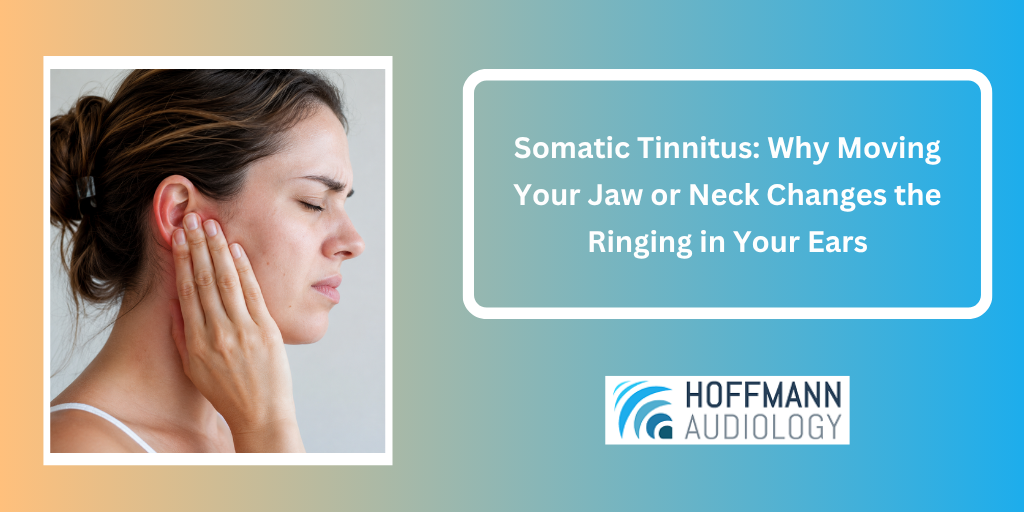
Have you ever noticed the ringing becomes louder when you clench your jaw, turn your head, or stretch your neck? If so, you may be experiencing somatic tinnitus, a unique form of tinnitus influenced by the body's muscles, joints, and nerves.
Many patients are surprised to learn that tinnitus is not always driven solely by hearing-related factors. In some cases, muscle tension, poor posture, jaw dysfunction, or neck problems may contribute to changes in tinnitus perception. Understanding these connections can help identify potential treatment options and improve symptom management.
Somatic tinnitus refers to tinnitus that can be altered by movement or sensory input from parts of the body, particularly the jaw, neck, face, shoulders, or head.
Unlike traditional tinnitus, which is often linked to hearing loss, somatic tinnitus occurs when signals from muscles, joints, or nerves interact with the brain's auditory pathways. These sensory signals can influence how tinnitus is perceived, causing the sound to change in volume, pitch, or intensity.
This explains why some people notice their tinnitus becoming more noticeable after a long day at a computer or during periods of increased muscle tension.
You may have somatic tinnitus if:
The jaw and ear share a surprisingly close relationship. The temporomandibular joint (TMJ), which connects the jaw to the skull, sits directly in front of the ear canal.
In addition to their physical proximity, the jaw and auditory system share nerve pathways. When the muscles or joints involved in jaw movement become irritated or dysfunctional, those signals may influence the auditory centers of the brain, altering tinnitus perception.
One of the most common answers to the question, "Can jaw problems cause tinnitus?" is yes.
TMJ disorders may produce symptoms such as:
When TMJ dysfunction affects nearby nerves and muscles, tinnitus symptoms may become more noticeable or fluctuate throughout the day.
The neck plays a significant role in how the brain processes sensory information. Muscles, joints, and nerves in the cervical spine communicate constantly with the central nervous system.
Neck injuries, chronic muscle strain, and spinal dysfunction can alter sensory input to the brain. In some individuals, these changes can influence tinnitus perception.
This is why some people with neck pain and tinnitus report that their symptoms worsen after poor sleep, prolonged desk work, or physical strain.
Several conditions may contribute to somatic tinnitus causes, including:
Stress affects more than emotional well-being. It often causes muscles in the neck, shoulders, and jaw to tighten unconsciously.
This increased tension can amplify sensory signals that influence tinnitus, making ringing seem louder or more intrusive.
Many patients ask, "Can poor posture cause tinnitus?"
Forward head posture, excessive smartphone use, and long hours at a computer can place additional strain on the neck and jaw. Over time, this may contribute to changes in tinnitus symptoms.
Even sleeping positions that place stress on the jaw or cervical spine may play a role.
Bruxism, or teeth grinding, places significant pressure on the jaw joint and surrounding muscles.
Many individuals unknowingly clench their teeth while sleeping, increasing jaw tension and potentially aggravating tinnitus symptoms.
A thorough hearing assessment is often the first step. Even when symptoms appear movement-related, hearing loss may still be contributing to tinnitus.
An audiologist may discuss:
Depending on the findings, referrals may be recommended to:
Treatment may include:
For patients with neck-related symptoms, recommendations may include:
Audiologists may also recommend:
The outlook depends largely on the underlying cause.
Many individuals experience noticeable improvement when contributing factors such as TMJ dysfunction, muscle tension, posture problems, or cervical spine issues are identified and addressed. While tinnitus may not disappear completely for everyone, reducing the factors that trigger or amplify symptoms can significantly improve quality of life.
Early evaluation often provides the best opportunity for developing an effective management plan.
Schedule an evaluation if you experience:
Because somatic tinnitus often involves multiple contributing factors, a professional assessment can help determine whether hearing, jaw, neck, or muscle-related issues are playing a role.
Somatic tinnitus highlights an important reality: tinnitus is not always just an ear problem. The jaw, neck, muscles, and sensory nerves can all influence how tinnitus is perceived.
If your tinnitus changes when you move your jaw, turn your head, or adjust your posture, those changes may provide valuable clues about the underlying cause. A comprehensive hearing evaluation can help identify contributing factors and guide you toward the most appropriate treatment options.
If your tinnitus changes when you move your jaw, neck, or head, those changes may provide important clues about what's causing your symptoms. At Hoffmann Audiology, we provide comprehensive tinnitus evaluations to help identify contributing factors and recommend personalized treatment options.
Contact us today to schedule your hearing assessment and take the next step toward lasting relief.

Be the first to post a comment
Leave a Reply Cancel reply