



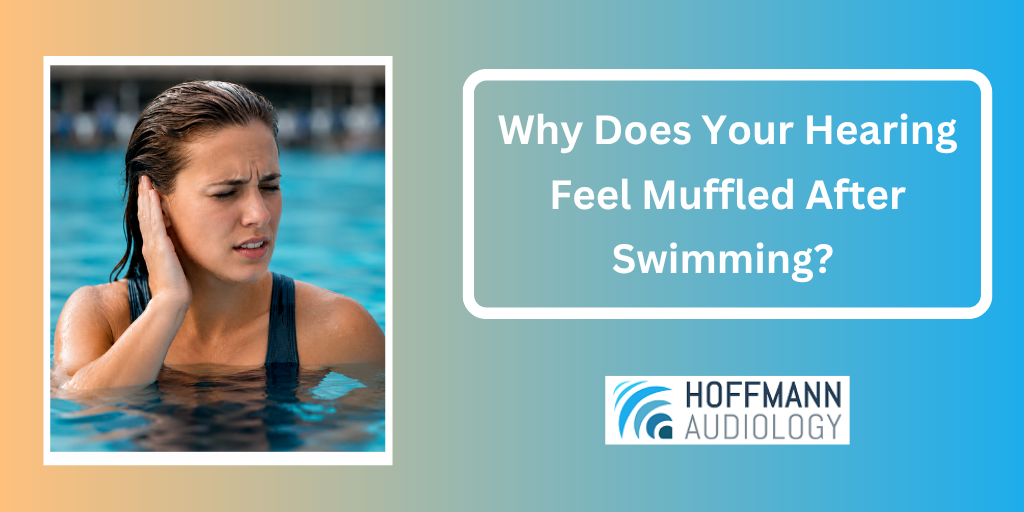
You hoist yourself out of the pool, shake your head vigorously, and…the world still sounds like it's coming from the bottom of a fish tank. Voices seem far away, and every sound arrives wrapped in cotton wool. Sound familiar?
This muffled sensation after swimming is remarkably common and, in most cases, completely temporary. Understanding why it happens, and when it warrants a closer look, can save you from unnecessary worry or, conversely, from ignoring something that actually needs attention.
Yes, temporary muffled hearing after a swim is one of the most frequently reported minor ear complaints. It can affect one or both ears simultaneously, and for the vast majority of people, normal hearing returns on its own once the underlying cause resolves.
That said, not all cases are created equal. If the muffled sensation persists beyond one or two days, or arrives alongside pain, ringing, or fluid drainage, it's worth having a professional take a look.
By far the most common culprit. When water enters the ear canal and doesn't drain fully, it creates a physical barrier between sound waves and your eardrum, resulting in that classic muffled or "full" sensation.
When moisture lingers in the outer ear canal, it creates a warm, humid environment where bacteria thrive. Swimmer's ear is the resulting infection, and it's particularly common in frequent swimmers.
Earwax (cerumen) is water-absorbent. When it gets wet, it can swell and expand, partially or fully blocking the ear canal. People who naturally produce more earwax are especially prone to this after swimming.
If you already have seasonal allergies, a sinus condition, or Eustachian tube dysfunction, swimming can temporarily worsen ear congestion. Pressure changes in the water may aggravate the middle ear and amplify any existing muffled feeling.
It can, yes, but the key word is “temporary”. Most swimming-related hearing changes fall under the category of conductive hearing loss, meaning the path that carries sound to the inner ear is partially blocked. This is different from sensorineural hearing loss, which involves damage to the inner ear or auditory nerve and is far more serious.
In the vast majority of cases, once water drains, an infection is treated, or impacted earwax is removed, hearing returns to its previous level. Permanent hearing loss from recreational swimming is rare, though repeated, untreated infections can sometimes cause complications over time.
If you notice a significant, one-sided drop in hearing after swimming, particularly with no obvious explanation, that warrants prompt evaluation to rule out other causes.
Recovery time depends on the underlying cause. Here's what you can typically expect:
| Cause | Typical Recovery Time |
|---|---|
| Trapped water | A few hours to one day |
| Swimmer’s ear (otitis externa) | Several days to a few weeks |
| Earwax blockage | Until professionally removed |
| Middle ear infection | Depends on treatment |
Mild muffled hearing that clears up within a few hours after swimming is almost always benign.
Seek professional evaluation if you experience:
These symptoms can indicate an infection that needs treatment, significant wax impaction, or a less common inner ear issue that benefits from early intervention.
When your ear feels blocked, the instinct is to do something, but several common remedies can actually make matters worse.
Avoid these:
The safest approach for trapped water is patience combined with gentle gravity-assisted drainage, tilting your head, hopping on one foot, or using a hair dryer on the lowest, coolest setting held at arm's length. For anything beyond simple water entrapment, let a professional guide your next steps.
A few simple habits can significantly reduce how often you deal with post-swim ear issues:
Dry gently after swimming: Tilt each ear downward and let gravity help water exit. Use a towel to dry the outer ear only.
Drain naturally: Try lying on your side with the affected ear facing down for a few minutes after swimming.
Use swim earplugs: Custom-fitted swim earplugs (recommended by an audiologist) keep water out without compromising comfort.
Choose clean water: Avoid swimming in water with high bacterial counts; it raises the risk of outer ear infection.
Treat infections promptly: Don't wait out swimmer's ear. Early treatment shortens recovery and reduces the risk of complications.
Schedule routine evaluations: Regular hearing check-ups help catch recurring issues before they develop into something more serious.
An audiologist can do more than just check whether you can hear the beeps in a booth. A professional hearing evaluation after swim-related ear issues can help determine:
Frequent swimmers, especially competitive athletes or those who swim several days a week, benefit most from periodic audiology check-ins, since cumulative exposure increases the risk of developing chronic ear conditions.
Muffled hearing after swimming is usually harmless and resolves quickly on its own. Trapped water, mildly swollen earwax, and minor pressure changes are all normal responses to water exposure, and they typically self-correct without intervention.
What matters is knowing the difference between a brief inconvenience and a symptom worth investigating. Persistent muffling, pain, drainage, or ringing are your ear's way of asking for attention. When in doubt, a quick visit to an audiologist will give you clarity, and protect the hearing you depend on every day.
Muffled hearing after swimming can be frustrating, but you don't have to manage it alone. At Hoffmann Audiology, we identify the cause of your symptoms and provide personalized solutions to help restore clear, comfortable hearing. Whether it's trapped water, earwax buildup, swimmer's ear, or another concern, our team is here to help.
Contact us today to take the next step toward clearer, healthier hearing.

Be the first to post a comment
Leave a Reply Cancel reply