



Patients often walk into a hearing evaluation convinced their hearing has quietly declined, only to find out the real cause has nothing to do with the inner ear at all. More often than you'd expect, it's something as simple as earwax, a substance most people treat as something to eliminate rather than understand. Produced by glands in your ear canals, it traps dust and debris and helps prevent infection. Healthy ears normally produce mild to moderate amounts of wax, and the ear is normally self-cleaning. Problems only start when wax fails to clear and builds up instead, at which point it can affect your hearing.
Understanding what earwax actually does, and when a buildup becomes a problem, makes it easier to know when a simple fix is enough and when it is not.
Earwax, known clinically as cerumen, is not a sign your ears are dirty. It is produced by glands in your ear canal and serves a genuinely protective purpose, even though it rarely gets credit for it.
Cerumen traps dust, debris, and microorganisms before they reach your eardrum. It also has natural antibacterial and lubricating properties that help keep your ear canal from drying out or becoming irritated.
In most people, earwax moves on its own. Jaw motion from talking and chewing gradually shifts older wax toward the ear opening, where it dries, flakes, and falls out without you noticing. This self-cleaning process is why most people never need to intervene at all.
Sometimes wax does not clear the way it should, and it hardens or accumulates instead. This is called cerumen impaction. Common signs include:
It is worth noting that these same symptoms can point to other issues too, including ear infections or, less commonly, something unrelated to wax entirely. That overlap is exactly why a proper look inside the ear matters more than guessing based on symptoms alone.
A few habits and physical traits make impaction more likely. Cotton swabs are a common culprit. They can clear the outer ear while pushing the rest of the wax deeper into the canal, where it then has no way out.
Ear canal shape plays a role too. People with narrower or curvier canals often have a harder time clearing wax naturally, regardless of how careful they are about hygiene.
Hearing aid and earplug users tend to see more buildup, since these devices can physically block the canal's normal self-cleaning path. Wax also naturally dries out and gets stuck more easily as we age. None of this means something is wrong with you. Some people simply produce more wax than others, and that variation is completely normal.
Impacted wax can physically block sound from reaching your eardrum, which creates a temporary form of hearing loss. It typically resolves once the wax is removed, though how quickly hearing returns to normal varies by individual.
That said, a hearing change caused by wax buildup can feel identical to other, unrelated causes of hearing loss. There is no reliable way to tell the difference just by how it feels day to day.
This distinction matters even more if you already wear hearing aids, since built-up wax can affect both your hearing and how well your device performs or fits.
For mild, occasional buildup, a few approaches are generally considered safe:
Avoid cotton swabs, bobby pins, ear candles, or anything inserted into the canal. These tend to pack wax in tighter rather than removing it, and can injure the ear canal or eardrum in the process. For anything beyond mild, occasional buildup, professional removal is the safer route, particularly for hearing aid users or anyone with a history of impaction.
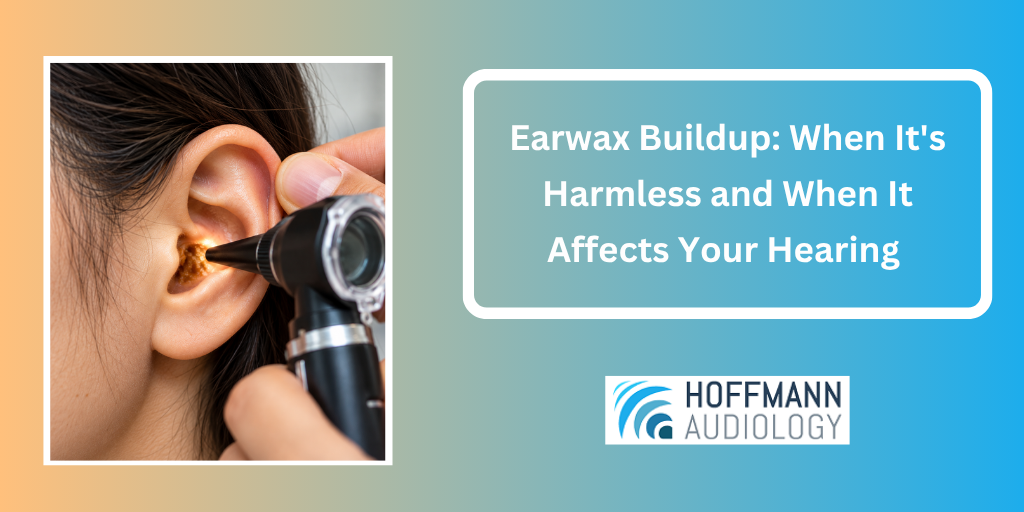
Professional removal looks different from anything you would do at home, and it is far more precise. An audiologist can view the ear canal directly, often with magnification, before choosing a removal method.
Common approaches include gentle suction, irrigation with warmed water or saline, or careful manual removal with a small instrument called a curette. The method chosen depends on how hardened the wax is and the shape of your ear canal.
This is also an opportunity to rule out other causes for your symptoms. If your hearing does not improve fully once the wax is cleared, that points to something else worth investigating, rather than leaving you to guess.
Earwax doing its job is nothing to worry about. But when it starts affecting how you hear, or when home approaches are not cutting it, that is worth getting checked rather than living with it. In some cases, tinnitus traced back to wax buildup improves once the wax is cleared, though results vary depending on the underlying cause.
If your ears have been feeling full or your hearing seems muffled, Hoffmann Audiology can take a look and figure out what is actually happening.
Contact us to schedule an appointment.
1. Is earwax buildup harmful?
Usually not, but ignoring symptoms like fullness or muffled hearing can let a minor issue linger longer than it needs to.
2. Can earwax buildup cause hearing loss?
Yes, though it is typically temporary and resolves once the wax is properly removed.
3. How often should earwax be professionally removed?
It depends on the individual. Hearing aid users and people prone to buildup often benefit from periodic checks.
4. Is it safe to remove earwax buildup at home?
For mild cases, softening drops are generally fine. Cotton swabs and ear candles are not recommended.
5. What removal method will an audiologist use?
It depends on the wax and your ear canal. Options include suction, irrigation, or manual removal with a curette.

Be the first to post a comment
Leave a Reply Cancel reply