Do you often ask people to repeat themselves, even when they’re speaking clearly to others? Or do you feel like conversations are becoming harder to follow, especially in busy places?
If so, you may be experiencing a common condition called presbycusis, also known as age-related hearing loss.
But presbycusis is not just about hearing sounds less clearly; it often changes the way people feel about communication itself. Many individuals begin to lose confidence in conversations, withdraw socially, or feel anxious in situations they once enjoyed.
Let’s explore what presbycusis really is, what it feels like, how it affects confidence, and most importantly, what you can do to take control of your hearing health again.
What Is Presbycusis?
Presbycusis is a gradual, age-related hearing loss that typically affects both ears equally. It happens slowly over time, which is why many people don’t notice it in the early stages.
Why does it happen?
Presbycusis is usually caused by a combination of factors:
- Natural aging of the inner ear
- Long-term noise exposure (traffic, loud workplaces, headphones)
- Genetic factors
Because it develops slowly, people often assume others are “mumbling” or that environments are just noisier than before.
What Is It Like to Have Presbycusis?
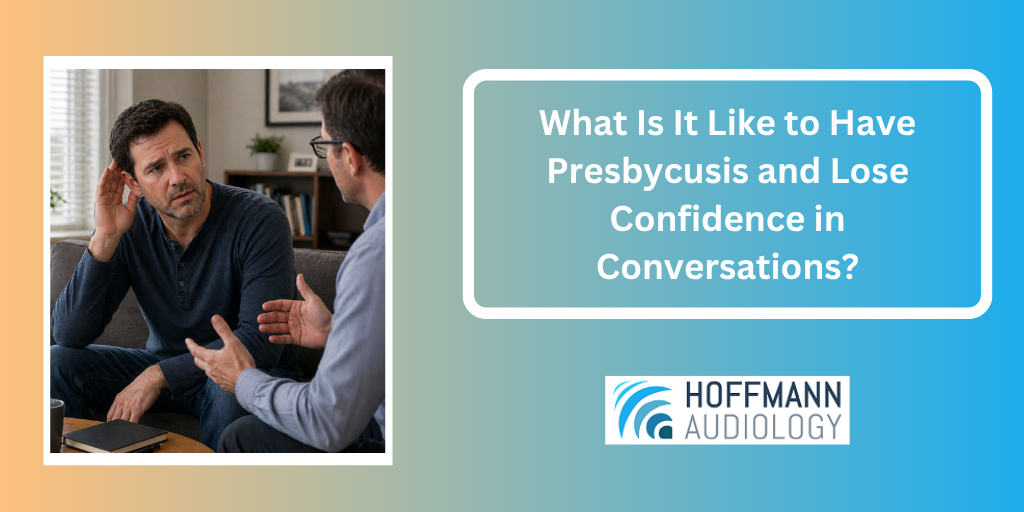
Presbycusis is not just about reduced hearing. It actually changes how conversations feel.
Here’s what many people experience:
- Difficulty hearing high-pitched sounds, such as children’s voices or ringing phones
- Struggling to follow conversations in noisy places like restaurants or family gatherings
- Frequently asking others to repeat themselves
- Mishearing words and responding in ways that feel awkward later
- Feeling mentally drained after long conversations because of constant focus and guessing
It can feel like you’re “present” in conversations, but not fully part of them.
How Hearing Loss Affects Daily Life
One of the most overlooked effects of hearing loss is emotional.
As communication becomes harder, confidence often drops.
This may lead to:
- Avoiding social gatherings or group conversations
- Fear of embarrassment or misunderstanding others
- Withdrawing from phone calls or public interactions
- Strained relationships with family or colleagues
- Emotional stress such as frustration, anxiety, or isolation
Over time, many people stop participating fully, not because they want to, but because conversations start to feel exhausting or unpredictable.
Early Signs You Should Not Ignore
Presbycusis often starts subtly. Watch for these early signs:
- Turning the TV or phone volume higher than others prefer
- Difficulty hearing clearly in crowded or noisy environments
- Noticing ear noise (ringing, buzzing, or hissing sounds)
- Trouble following conversations during phone calls
- Feeling like people are speaking less clearly than before
These signs may seem small, but they are often the first indicators of hearing changes.
Understanding Your Hearing Age
You may be familiar with your actual age, but have you ever heard of your hearing age?
What is “hearing age”?
Your hearing age refers to how well your ears are functioning compared to what is expected for your biological age.
For example:
- A 50-year-old may have the hearing ability of someone much older due to long-term noise exposure
- A 65-year-old may still have relatively strong hearing due to healthy habits
Why it matters:
Understanding your hearing age helps you:
- Detect early hearing decline
- Take preventive steps sooner
- Maintain better communication and quality of life
Lifestyle choices, like headphone volume, workplace noise, and overall ear care, play a big role in hearing health.
Why Hearing Testing Is Important
A hearing test is the simplest and most effective way to understand your hearing health.
When should you get tested?
- If you frequently ask others to repeat themselves
- If conversations feel unclear or tiring
- If family members notice your hearing changes
- If you experience ear noise or ringing
What happens during a hearing test?
A hearing specialist checks how well you hear different sounds, tones, and speech patterns. It is:
- Quick
- Painless
- Non-invasive
Benefits of early hearing testing:
- Early detection of hearing loss
- Better treatment outcomes
- Prevention of further decline
- Improved communication confidence
Unfortunately, many people delay testing due to stigma, but early action makes a huge difference.
Solutions That Can Help You Regain Confidence
1. Hearing aids and modern technology
Modern hearing loss hearing aids are:
- Small and discreet
- Smart and adaptive
- Designed to reduce background noise
- Capable of improving speech clarity significantly
They are no longer bulky or uncomfortable like older models.
2. Communication strategies
Simple adjustments can make a big difference:
- Face the speaker directly
- Choose quieter environments when possible
- Ask people to speak clearly, not loudly
3. Lifestyle changes
- Reduce exposure to loud noise
- Use ear protection in noisy environments
- Take breaks from continuous sound exposure
4. Professional guidance
Consulting a hearing specialist ensures you get personalized solutions instead of guessing.
Tips to Improve Conversations Despite Hearing Loss
Even before treatment, small habits can help:
- Position yourself closer to the speaker
- Watch lip movements and facial expressions
- Don’t hesitate to ask for clarification
- Reduce background noise whenever possible
- Inform others about your hearing difficulty: most people are happy to adjust
Confidence starts returning when communication becomes more predictable.
When to Seek Help
It’s time to consult a specialist if:
- Conversations feel consistently difficult
- You are avoiding social situations
- You suspect gradual hearing decline
- Ear noise or misunderstanding becomes frequent
Delaying help often makes adjustment harder later. Early evaluation leads to better outcomes and smoother adaptation.
Regain Control of Your Hearing!
Presbycusis is a natural part of aging for many people, but it does not have to take away your confidence or connection with others.
Hearing changes may start quietly, but their emotional impact can feel loud and overwhelming. The important thing to remember is this: you are not losing your ability to connect; you are simply experiencing a treatable change in hearing.
With awareness, timely hearing testing, and the right support, confidence in conversations can be rebuilt, one step at a time.
Rediscover Clear Conversations with Hoffmann Audiology
If conversations feel strained or harder to follow, it’s time to take the next step. Hoffmann Audiology offers expert hearing testing and advanced solutions to help you hear clearly and reconnect with confidence.
Contact us today and enjoy conversations that feel effortless again.
Frequently Asked Questions (FAQs)
- At what age does presbycusis usually begin?
Presbycusis commonly begins after age 50, but signs can appear earlier depending on lifestyle and noise exposure. - Can untreated presbycusis lead to other health issues?
Yes, untreated hearing loss may contribute to social isolation, anxiety, and cognitive decline over time. - Can earwax cause symptoms similar to presbycusis?
Yes, excessive earwax can temporarily reduce hearing, but it is different from age-related hearing loss. - Is presbycusis the same as normal hearing loss?
It is a type of age-related hearing loss, but it progresses gradually and affects high-frequency sounds first. - Is it normal to feel frustrated or emotional due to hearing loss?
Absolutely. Many people experience frustration or sadness, but support and treatment can significantly improve quality of life.





Leave a Reply Cancel reply